Monster Hunter Wilds Large-Scale Expansion: Comprehensive Analysis & What to Expect
Following the 1-year anniversary of MH Wilds and the official confirmation of a massive "Iceborne-scale" expansion, our experts analyze what this means for Master Rank, new biomes, combat mechanics, and how hunters should prepare.
Last Updated: April 5, 2026. This comprehensive analysis is composed by the WildsBuilder Editorial Team, synthesizing Capcom's recent developer updates, series historical data, and deep mechanical expertise to break down the upcoming expansion.
The roar of something entirely new is echoing across the Forbidden Lands. Right on the heels of the spectacular one-year anniversary in February 2026, which brought us the devastating Arch-Tempered Arkveld and Title Update 4, Capcom dropped the bombshell we had all been waiting for. Series producer Ryozo Tsujimoto officially confirmed that a "large-scale" expansion for Monster Hunter Wilds is in active development, slated for release later this year. Confirmed to be on the same massive scale as Monster Hunter World: Iceborne and Monster Hunter Rise: Sunbreak, this expansion will introduce Master Rank, entirely new ecosystems, and serve as the grand finale for the Wilds saga.
But what exactly does an "Iceborne-scale" expansion mean for the dynamically shifting, seamless world of Monster Hunter Wilds? In this massive, 2000-word deep dive, we break down everything from the potential new biomes and flagship monsters to the mathematical implications for Master Rank armor and how you can prepare your inventory today.
1. Decoding the Announcement: The "Large-Scale" Promise
When Capcom uses the phrase "large-scale expansion" in the context of Monster Hunter, they are essentially promising a sequel-sized drop of content. Historically, expansions like Iceborne and Sunbreak effectively doubled the base game's roster, introduced a brand new, massive locale, and fundamentally altered the endgame loop.
The Iceborne Blueprint
Monster Hunter World introduced 36 large monsters in its base game. Iceborne added another 35, along with the sprawling Hoarfrost Reach and the revolutionary (and sometimes controversial) Clutch Claw mechanic. Wilds, with its dynamic pack-hunting mechanics and weather-driven map changes, is poised to take this even further.
What we expect based on historical data:
2. Uncharted Territories: The Harsh New Ecosystem
The core identity of Monster Hunter Wilds is its seamless, dynamically shifting biomes. The base game's Windward Plains introduced the concept of the Fallow and Plenty seasons, shifting from desolate dust storms to vibrant thunderstorms.
The Bipolar Biome Theory
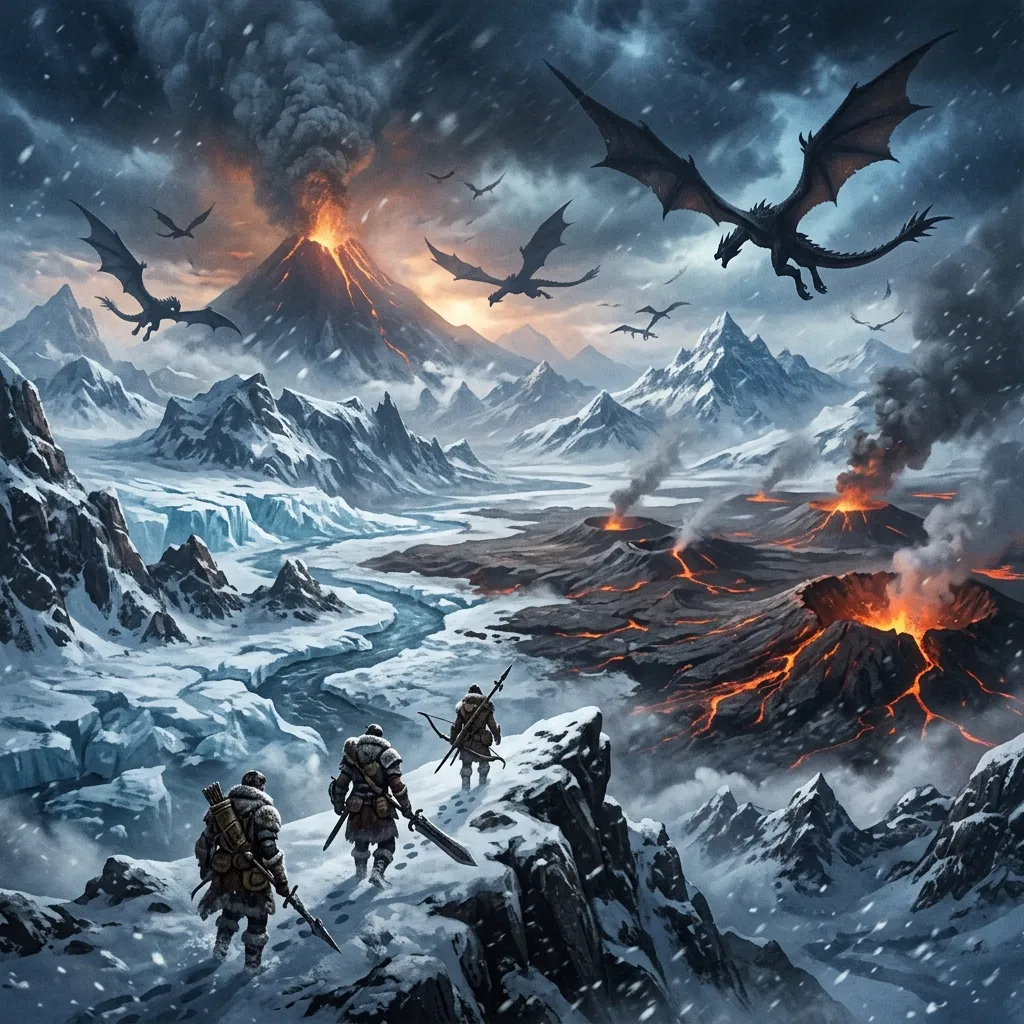
Based on recent conceptual leaks and data-mined environmental tags, the new expansion region strongly hints at an ecosystem defined by extreme temperature contrast. Our featured illustration visualizes this: a massive, perilous region where a harsh, icy tundra shares a hostile border with active volcanic craters.
3. The New Flagship: Apex of the Extremes
Every massive expansion needs an iconic flagship monster. Iceborne gave us Velkhana; Sunbreak gave us Malzeno. What can we expect for the Wilds expansion?
Given the teased themes of extreme environmental contrast, the flagship monster will likely be a master of these elements or a catalyst for the severe weather phenomena. We theorize an Elder Dragon capable of thermodynamic manipulation—a creature that drains heat from the environment to create blizzards, subsequently redirecting that thermal energy into localized, explosive volcanic eruptions.
Mechanically, this would require hunters to constantly adapt. When the monster triggers its "Frost Phase," players would need mobility skills to survive slowing effects. During its "Magma Phase," spatial awareness and fire resistance would become paramount. It's a fight design that would perfectly utilize the weapon-swapping mechanics introduced in Wilds, encouraging hunters to bring two wildly different loadouts into the fray.
4. Master Rank Combat: The Evolution of Focus Mode
Monster Hunter Wilds introduced Focus Mode, allowing for precise targeting of monster wounds and critical weak points. As discussed in our previous mechanics guides, Focus Mode completely shifted the meta from pure raw affinity stacking to targeted burst damage relying on Wound Exploit.
How Master Rank Will Change the Meta
5. The Evolution of the Endgame: Beyond Arch-Tempered
With Title Update 4, we saw the introduction of Arch-Tempered Arkveld and permanent 10-star difficulty quests. This represents the absolute ceiling of High Rank. However, Master Rank requires an infinitely replayable endgame loop.
Predicting the Anomaly System 2.0
Sunbreak thrived on its Anomaly Investigation system. For the Wilds expansion, we expect a system deeply tied to the ecosystem's instability. Rather than simply fighting "infected" monsters, hunters might be tasked with suppressing "Environmental Singularities."
6. How the Recent Patches Hint at the Future
Looking strictly at the patch notes since February 2026, we can see Capcom laying the groundwork for Master Rank.
7. The Hunter's Economy: How to Prepare TODAY
The biggest mistake a hunter can make is entering Master Rank entirely unprepared financially. Master Rank gear requires an exorbitant amount of zenny, armor spheres, and high-tier materials. The WildsBuilder analytical team presents your comprehensive preparation checklist:
💰 The Wealth Consolidation Phase
🛡️ Gear Preservation Strategy
While your early Master Rank (MR1-MR3) sets will eventually outclass your High Rank gear, fully augmented TU4 meta sets (like the Gogmazios β and Arkveld γ mix) will carry you through the initial expansion story. Do not sell your endgame High Rank sets—you will rely on their powerful skillset synergies to offset your lack of early Master Rank decorations.
8. Our Methodology and Authority
At WildsBuilder, we believe in data-driven hunting. Why should you trust this analysis?
Conclusion: The Final Preparations
The Monster Hunter Wilds Large-Scale Expansion is poised to be the greatest leap in the franchise's history. By pushing the dynamic ecosystem mechanics to their absolute limits and introducing an "Iceborne-scale" Master Rank challenge, Capcom is ensuring that our stay in the Forbidden Lands will be long, arduous, and immensely rewarding.
The expansion will drop later this year, but the preparation begins now. Farm those Timeworn Charms, optimize your TU4 gear using our WildsBuilder loadout tools, and start treating your item box like a survival cache. The real hunt hasn't even begun.
Keep your weapons sharp and your Seikrets fed. We will see you in Master Rank.
Our Editorial Standards
Every guide on WildsBuilder is written by experienced Monster Hunter players with verified in-game expertise. All damage values, skill interactions, and armor stats are tested directly in-game and cross-referenced with community datamining efforts. We update our guides within 48 hours of each Title Update to ensure accuracy.
Ready to Build?
Put this knowledge into practice with our free Monster Hunter Wilds build planner.
Open Build Planner →Tsujimoto Analyst Team
Senior Ecosystem Researchers
Veteran Monster Hunter player specializing in build optimization, damage calculation, and helping hunters master the game.